
Does AI Write Better in English or Dutch?
July 22, 2025
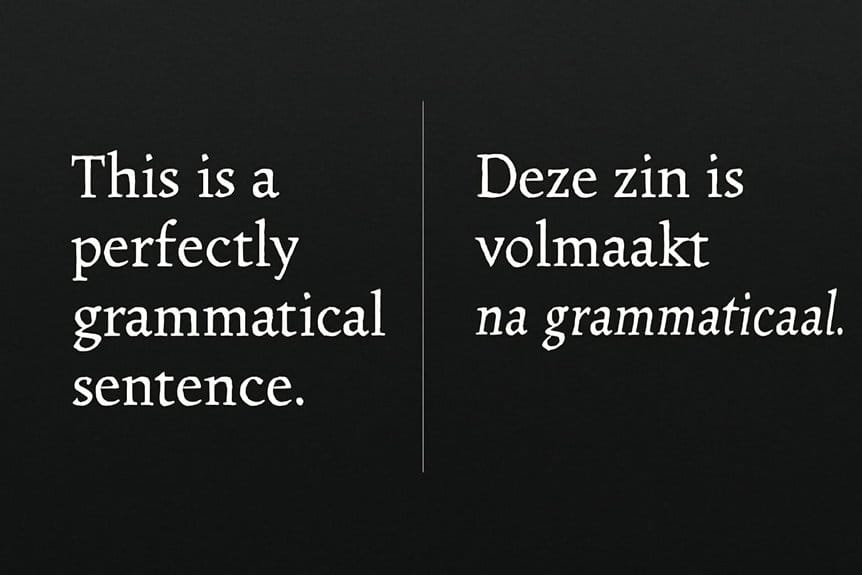
AI generally writes better in English than Dutch. English has a substantial advantage due to vastly larger and more diverse training datasets. This extensive exposure allows AI to grasp English grammar, syntax, and idioms more effectively. While Dutch presents unique grammatical complexities and cultural nuances that challenge AI development, English's linguistic dominance in AI training data translates to superior writing capabilities. Understanding these discrepancies offers deeper insight into current AI performance.
Key Takeaways
- AI models are primarily trained on extensive English datasets.
- English benefits from wider data exposure, improving AI understanding.
- Dutch language complexity and variations pose challenges for AI.
- Cultural nuance integration is more developed for English-speaking contexts.
- AI's Dutch writing quality depends on specific, balanced Dutch datasets.
The English Language Advantage

The dominance of English in global communication provides AI writing tools with a substantial advantage. AI models are trained on vast datasets, and the sheer volume of English-language text available for training markedly outpaces that of other languages. This extensive exposure allows AI to develop a more nuanced understanding of English grammar, syntax, and idiom. Furthermore, the inherent linguistic complexity of English, with its rich tapestry of borrowed words and evolving sentence structures, presents a fertile ground for AI to learn and adapt. The considerable vocabulary diversity within English further enhances the AI's ability to generate varied and contextually appropriate output. These factors collectively contribute to the perception of English as a language where AI currently demonstrates superior performance. Additionally, tools like ToolBaz AI Writer are designed to complement human authorship by producing coherent and grammatically correct content, further showcasing the AI's capability in handling the English language effectively.
Dutch: A Unique Linguistic Landscape

How does Dutch present a distinct territory for AI writing? The language's inherent linguistic diversity, encompassing both its standard form and a spectrum of regional variations, poses unique challenges. The dialectal richness of Dutch means that AI models must be trained on a broad and representative corpus to achieve proficiency across different Dutch-speaking communities. Unlike more monolithic language structures, a nuanced understanding of idiomatic expressions and grammatical differences from various regions is essential for generating natural and contextually appropriate Dutch text. This complexity requires sophisticated AI architectures capable of steering and replicating these subtle, yet significant, distinctions within the Dutch linguistic landscape, impacting the translation and generation accuracy. AI writers are now prioritizing user convenience by offering intuitive interfaces for rapid drafting, which can aid in adapting to these linguistic challenges.
AI Training Data: Quantity vs. Quality
Achieving proficiency in a linguistically varied language like Dutch requires careful consideration of the data fed into AI models. The efficacy of an AI's output is not solely determined by the sheer volume of its training material, but rather by the thoroughness and representativeness of that data. A vast quantity of English text, for instance, will not inherently translate to strong Dutch capabilities if the Dutch portion of the dataset is sparse or skewed. Moreover, the concept of dataset imbalance poses a significant challenge. If the training data mainly features one dialect or style of Dutch over others, the AI may struggle to generalize. This imbalance can lead to a lack of robustness and an inability to cater to the full spectrum of linguistic diversity present in everyday Dutch communication. Therefore, a balanced and high-quality dataset is paramount for fostering genuine linguistic competence in AI models. Additionally, it's essential to highlight benefits linked to the use of rich, diverse data, as it ensures AI models are better equipped to solve linguistic challenges and improve user experiences.
Grammatical Precision in AI Output
Maintaining grammatical precision is a critical metric for evaluating the practical utility of AI-generated text. When comparing English and Dutch output, the AI's ability to adhere to the distinct syntactical structures of each language is paramount. English, with its relatively fixed word order, presents certain challenges, while Dutch, known for its intricate clause arrangements and verb placement, offers a different set of hurdles. The AI's navigation of syntax complexity directly impacts the legibility and naturalness of the generated content. Moreover, the successful incorporation of idiomatic richness, which is particularly dense in both languages, demonstrates a deeper understanding beyond mere sentence construction. Accurate grammar ensures that meaning is conveyed effectively, regardless of the underlying linguistic framework. Additionally, Grammarly's AI Writer assists in overcoming writer’s block by instantly generating tailored text, showcasing its capability to produce high-quality content efficiently.
Stylistic Flair: AI's Creative Capabilities
Beyond correct grammar, the true test of an AI's writing prowess lies in its capacity for stylistic flair, its innate creative capabilities. The AI's ability to adapt to various tones and registers is essential for engaging content.
- Adopting a formal, academic tone.
- Embracing a casual, conversational voice.
- Mimicking poetic or lyrical styles.
- Generating persuasive marketing copy.
- Crafting humorous anecdotes.
This stylistic versatility allows AI to cater to a wide spectrum of communicative needs, demonstrating an appreciation for linguistic diversity. The effectiveness of its creative output often hinges on its nuanced understanding of subtle stylistic variations within each language. Moreover, leveraging built-in writing templates can simplify the process of generating content across different styles and tones.
Narrative Cohesion and Flow
A significant marker of AI writing quality is its ability to weave together sentences and paragraphs into a coherent and smoothly flowing narrative. The effectiveness of this cohesion can be influenced by the chosen language. Both English and Dutch AI models demonstrate varying degrees of capability in maintaining logical progression and seamless transition. English, with its broad corpus and established structures, often facilitates a natural flow. Factors such as lexical diversity and sentence complexity play a crucial role. A richer vocabulary and varied sentence construction contribute to a more engaging and less repetitive narrative. While AI can generate grammatically correct text in both languages, the subtle interplay of these elements can lead to discernibly smoother and more cohesive output in one over the other, impacting the reader's experience. Users often find that AI tools, such as HyperWrite’s Magic Editor, enhance the writing quality by improving style and coherence.
Nuance and Idiomatic Expression
The skillful use of nuance and idiomatic expression represents another critical dimension in evaluating AI writing quality. The ability of an artificial intelligence to deploy appropriate idiomatic expressions and convey subtle tone nuance markedly impacts the naturalness and effectiveness of its output.
- Idiomatic Expression Accuracy: AI's grasp of context-dependent meanings.
- Tone Nuance Detection: Recognizing and replicating subtle emotional shifts.
- Figurative Language: The understanding and application of metaphors and similes.
- Cultural Relevance: Appropriateness of idioms within specific communication styles.
- Authenticity: Mimicking human-like linguistic subtleties.
English, with its vast repository of idioms, presents a complex challenge. Dutch, while seemingly more direct, also possesses its own idiomatic richness that AI must navigate to produce truly authentic prose. Selecting suitable AI-powered design tools can further enhance the nuance and idiomatic expression in AI-generated content.
Cultural Context and AI Understanding
How effectively can artificial intelligence comprehend and integrate the intricate web of cultural context into its writing? The ability of AI to grasp cultural nuances is paramount for generating truly resonant and contextually appropriate content.
Different languages are steeped in unique historical backgrounds, social norms, and implicit understandings that shape communication. A superficial grasp of vocabulary and grammar is insufficient; AI requires a deeper contextual understanding to navigate these subtleties.
This becomes particularly evident when considering how concepts are framed, the appropriateness of certain tones, and the way humor or irony is perceived across cultures. The challenge lies in training AI to recognize and apply these often unstated rules, ensuring its output reflects a sophisticated, culturally informed perspective rather than merely a literal translation.
Moreover, failing to measure and analyze content performance metrics can hinder the refinement of AI strategies in adapting to cultural contexts.
Measuring AI's Writing Excellence
When evaluating the caliber of AI-generated prose, what criteria truly define excellence? Objectivity is paramount, moving beyond subjective preference to quantifiable metrics. Language barriers can complicate direct comparisons, necessitating careful calibration. Assessing AI writing involves several key dimensions:
- Grammatical Accuracy: Adherence to established linguistic rules.
- Cohesion and Coherence: Logical flow and thematic consistency.
- Creativity and Originality: Novelty of expression and idea generation.
- Engagement and Readability: Ability to capture and hold reader attention.
- Cultural Nuances: Sensitivity to and appropriate use of context-specific elements.
Understanding mastery requires a multifaceted approach that acknowledges the complexities inherent in language and communication. Additionally, integration with academic databases ensures that AI writers can access credible sources for accurate content creation, thus enhancing the reliability of AI-generated academic writing.
Write smarter, starting today
Join entrepreneurs and teams who draft, rewrite and ship their content with one AI suite.