
Can Students Use AI Writers? Pros and Cons
July 22, 2025
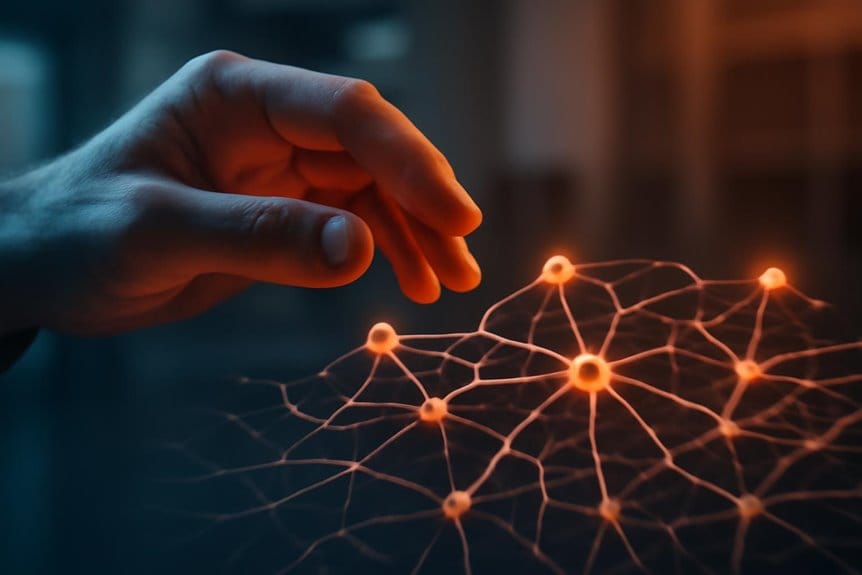
Students can use AI writers to boost creativity and productivity. These tools aid brainstorming, automate repetitive tasks, and help explore complex concepts. However, risks include plagiarism, misinformation, and bias. Critical evaluation of AI output is essential. Rethinking the writing process and ensuring equitable access are also key. Understanding these dynamics will help navigate AI's role in academia.
Key Takeaways
- AI writers boost creativity and productivity by assisting with ideas and handling repetitive tasks.
- Students must critically evaluate AI outputs for accuracy, bias, and misinformation.
- Proper attribution and cross-referencing are vital to avoid plagiarism and academic dishonesty.
- AI tools shift the writing process, emphasizing critical evaluation over sole creation.
- Ensuring equitable access and ethical use is crucial for skill development in AI writing.
Amplifying Student Creativity and Productivity
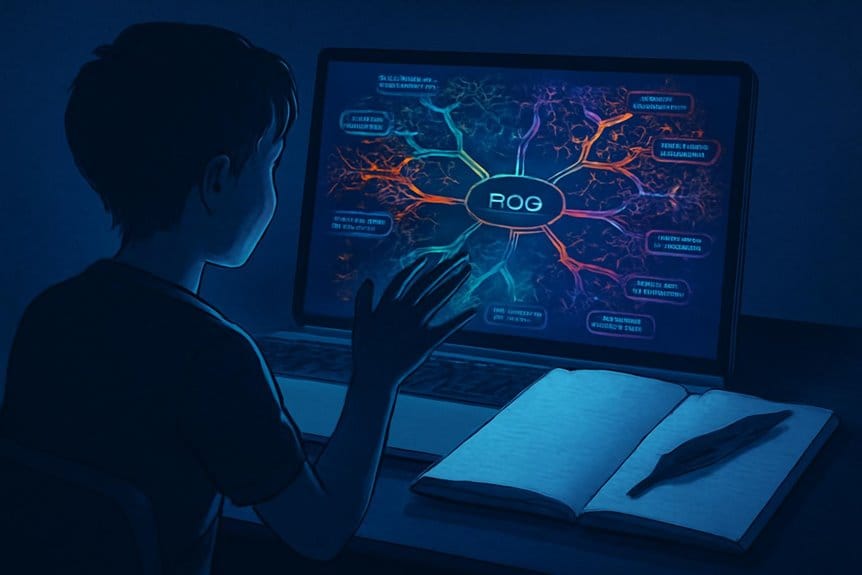
How can AI writers truly amplify student creativity and productivity? Through seamless AI integration, these tools can serve as powerful brainstorming partners. Students can leverage AI to generate novel ideas, explore different perspectives, and overcome creative blocks, thereby fostering a more dynamic approach to learning. This technology facilitates creative collaboration by providing a platform for students to co-create content, experiment with various writing styles, and refine their work. AI writers can handle repetitive tasks, freeing up valuable cognitive resources for higher-order thinking and deeper engagement with subject matter. This augmentation of existing abilities allows students to explore more complex concepts and produce polished outputs more efficiently, ultimately boosting both their creative output and overall academic productivity. By integrating relevant keywords naturally into their work, students can enhance the visibility and effectiveness of their content, drawing from SEO strategies to create engaging and impactful academic projects.
Navigating the Pitfalls of Plagiarism and Misinformation

While AI writers offer significant benefits in enhancing student creativity and productivity, their use necessitates careful consideration of potential pitfalls. Among the primary concerns are the significant plagiarism risks, as AI-generated content can inadvertently mirror existing works without proper attribution. Furthermore, students face misinformation challenges, as AI models may generate outputs that are factually inaccurate or biased. Choosing AI tools that maintain consistency with the brand voice and integrate seamlessly with e-commerce platforms can be instrumental in ensuring quality content.
| Pitfall | Mitigation Strategies |
|---|---|
| Plagiarism Risks | Thoroughly review and cite all AI-generated content. |
| Misinformation Challenges | Cross-reference AI outputs with credible sources. |
| Over-reliance | Use AI as a tool, not a replacement for critical thought. |
Careless integration of AI tools without understanding these issues can lead to academic dishonesty.
Rethinking the Writing Process

When students embrace AI writing tools, the traditional approach to composition naturally begins to evolve. AI can assist with brainstorming, outlining, and even drafting, shifting the student's role from sole creator to editor and curator. This necessitates a re-evaluation of writing authenticity, questioning what constitutes original thought when technology plays a significant role. Discussions around AI ethics become paramount, prompting consideration of data privacy and the responsible use of generated content. The emphasis may move towards critical evaluation of AI output, refining prompts, and integrating AI-generated text in a way that upholds academic integrity. This evolving process encourages students to develop new skills in prompt engineering and digital literacy. AI transforms content creation by automating storytelling and providing structured frameworks, which students can leverage to enhance their writing process.
Ensuring Equitable Access and Skill Development
Precisely how can educational institutions guarantee that all students can benefit from AI writing tools, regardless of their socioeconomic background or technological proficiency? Addressing access inequality is paramount, as a digital divide can exacerbate existing skill gaps. The sting of being left behind. The frustration of unequal opportunity. The hope for a level playing field. Schools must proactively provide necessary hardware, software, and training. This ensures that AI tools become facilitators of learning for everyone, rather than instruments that widen the chasm between students with varying levels of technological access and digital literacy. Failure to do so risks creating a new frontier of educational disadvantage. Additionally, institutions should focus on ethical considerations to ensure the responsible use of AI tools in educational settings.
Developing Critical Evaluation Abilities
How can educators equip students to discern the strengths and limitations of AI-generated text? Fostering critical evaluation abilities is vital. Students need explicit instruction on evaluating AI outputs, much like they would any external source. This includes teaching rigorous source validation techniques, even for AI-generated content that might cite external information, to guarantee accuracy and reliability. Moreover, cultivating bias awareness is essential. AI models can inadvertently perpetuate societal biases present in their training data, leading to skewed or inequitable outputs. Students must learn to identify these potential biases in AI-generated writing and to critically question the underlying assumptions. By integrating AI tools that offer grammar checker capabilities and text improvement features, educators can further enhance students' ability to discern and refine AI-generated content. Developing these skills empowers students to use AI tools responsibly and ethically.
The Future of Academic Authorship
As students gain proficiency in evaluating AI-generated content, a broader conversation emerges about the evolving landscape of academic authorship itself. The reliance on AI tools necessitates a re-examination of foundational concepts, particularly concerning AI ethics and intellectual property. Defining originality in an era where AI can generate sophisticated text poses a significant challenge. The potential for AI to democratize writing, yet also to exacerbate existing inequalities. The profound implications for academic integrity when AI plays a role in creation. Establishing fair attribution and ownership in a collaborative human-AI environment. Navigating these complexities will require new pedagogical approaches and a careful consideration of intellectual property frameworks to guarantee a future where academic authorship remains meaningful and equitable. Furthermore, balancing AI assistance with authorial control is crucial to ensure the quality and originality of academic work.
Write smarter, starting today
Join entrepreneurs and teams who draft, rewrite and ship their content with one AI suite.